Plastic surgery
Breast augmentation in Turkey: a 2026 guide
Medically reviewed by Dr. Mehmet Yılmaz
Quick answer
Breast augmentation in Turkey increases breast size and shape, using either silicone implants or a fat transfer from your own body, and at SaluVista it starts from £2,680 / $3,605 (the implant is an extra cost), with a transparent quote after assessment. Results can look natural. But implants are not lifetime devices, and a good surgeon may advise a smaller change or none at all.
- Two routes: implants for a reliable, larger increase; fat transfer for a modest, natural boost with no implant.
- From £2,680 / $3,605 (≈ €3,160); the implant itself is priced separately once its type and size are chosen for you.
- Recovery: around 1–2 weeks off light work; swelling settles over weeks to months.
- Honest longevity: implants can last well over a decade but may need revision, so plan for possible future maintenance.
In this guide
Breast augmentation (augmentation mammoplasty, or a "boob job") is one of the most requested cosmetic operations worldwide, and it increases breast size while improving shape or restoring volume lost after weight change, pregnancy or breastfeeding. Below we walk through your two main options honestly, how sizing and the consultation actually work, who the surgery suits, what recovery really feels like, and what implants can promise and what they can't. It's part of our plastic surgery in Turkey hub. It's general information to help you prepare, not medical advice.
What breast augmentation is
Augmentation adds volume and reshapes the breast. That makes it different from a breast uplift (mastopexy), which lifts and reshapes sagging tissue without necessarily adding size, though the two are often combined in one operation. If your main concern is drooping rather than volume, our breast reduction & uplift guide is the more relevant one, because an implant on its own won't lift a breast that has significantly descended.
At SaluVista, plastic and aesthetic surgery is led by two board-certified plastic surgeons, and breast work here is guided by Op. Dr. Caner K., whose practice spans reconstructive and aesthetic surgery across both the face and the body. You'll speak with your surgeon before you travel, screening and booking happen inside the app, and a qualified human makes the final call on whether to proceed and how.
Implants vs fat transfer
Silicone (and saline) implants
Implants are the classic route. A silicone shell, filled with cohesive silicone gel or saline, sits either behind the breast tissue or partly under the chest muscle, placed through a discreet incision (commonly in the crease under the breast). Implants give a reliable, larger and more predictable increase in size, and a wide choice of shapes and profiles lets the result be tailored to your frame. They're the stronger fit if you want a clear step up in size or more upper-fullness, but the catch is simple: an implant is a manufactured device, and over the years it can need revision.
Fat transfer (autologous fat grafting)
Fat transfer takes fat from areas like the tummy, flanks or thighs by liposuction, purifies it and injects it into the breasts, and because it uses your own tissue, it can feel very natural while slimming the donor area a little as a bonus. The volume gain is modest though, typically less than half a cup to a cup, and the body reabsorbs some of the grafted fat, so results are less predictable and a second session is sometimes needed. It suits people after a small, natural enhancement, not a dramatic increase.
Implants are not lifetime devices, and I say that before we ever discuss size or shape. Planning honestly for the possibility of a future revision is what makes the first operation trustworthy.Dr. Mehmet Yılmaz, Plastic Surgery
Side-by-side comparison
| Implants | Fat transfer | |
|---|---|---|
| Size increase | Small to large, predictable | Modest (often under a cup) |
| Material | Silicone/saline device | Your own fat |
| Feel | Natural to firm, depends on choice | Very natural |
| Extra benefit | Upper-pole fullness & projection | Slims the donor area |
| Predictability | High | Some fat reabsorbs |
| Future maintenance | May need revision over years | May need a top-up session |
| Best for | Clear step up in size | Subtle, natural enhancement |
Not sure which lane you're in? Plenty of people who want both a lift and more volume are really after a combined plan, and our mommy makeover guide covers augmentation alongside tummy and body procedures after pregnancy.
Sizing & the consultation
Good sizing is a conversation, not a number picked off a catalogue. Your surgeon assesses your chest width, existing breast tissue, skin quality and the look you're after, then recommends an implant profile and volume (measured in cc, not cup size) built around your frame rather than a target cup. Cup sizes drift between brands and bodies. So "a full C" means little without measurements.
- Bring reference photos of results you like (and dislike), since they communicate taste better than words.
- Ask about placement (over or under the muscle), incision site and implant type, and how each affects feel, recovery and future scans.
- Discuss the "reveal your goal" test — sizers or 3D imaging where available help set realistic expectations before anything is decided.
Because SaluVista patients speak with their surgeon before travelling, this planning happens up front, not on arrival, and you should never feel pushed toward a larger size than you want, or toward surgery you're unsure about.
Are you a candidate?
Breast augmentation is generally considered for adults in good general health, with fully developed breasts and realistic expectations, and it's often chosen for naturally smaller breasts, asymmetry, or volume lost after weight change or pregnancy. You may be advised to wait if you're planning pregnancy soon, still breastfeeding, or your weight hasn't settled yet, since each of those changes the breast and the result.
A good outcome starts with honesty. Tell your surgeon about smoking, medical conditions, medications and family history. For some people the safer answer is a smaller change, a different technique, or no surgery at all, and hearing that is a sign of good care, not a lost sale.
The NHS makes the point that all cosmetic surgery carries risk and should be an informed, unpressured decision, and its NHS cosmetic procedures pages are worth reading before you commit. If it's safety you're weighing specifically, see our honest look at whether plastic surgery in Turkey is safe.
Recovery & aftercare
Augmentation is usually day-case or one-night surgery under general anaesthetic. Here's a realistic, staged picture, though individual recovery varies:
- First few days: tightness, soreness and swelling, especially if implants sit under the muscle. Pain is managed with medication.
- Week 1–2: most people return to desk work and light daily activity. A supportive surgical bra is worn to help implants settle.
- Weeks 4–6: heavy lifting, vigorous exercise and upper-body gym work are gradually reintroduced with your surgeon's clearance.
- Weeks to months: swelling settles and implants "drop and fluff" into their final position, so the final shape takes time to appear.
Fat-transfer recovery adds mild soreness at the liposuction donor sites. Follow your surgeon's aftercare, attend follow-ups, and don't judge your result in the first weeks, and if you're travelling home, plan a safe interval before flying as advised by your surgeon.
Honest longevity
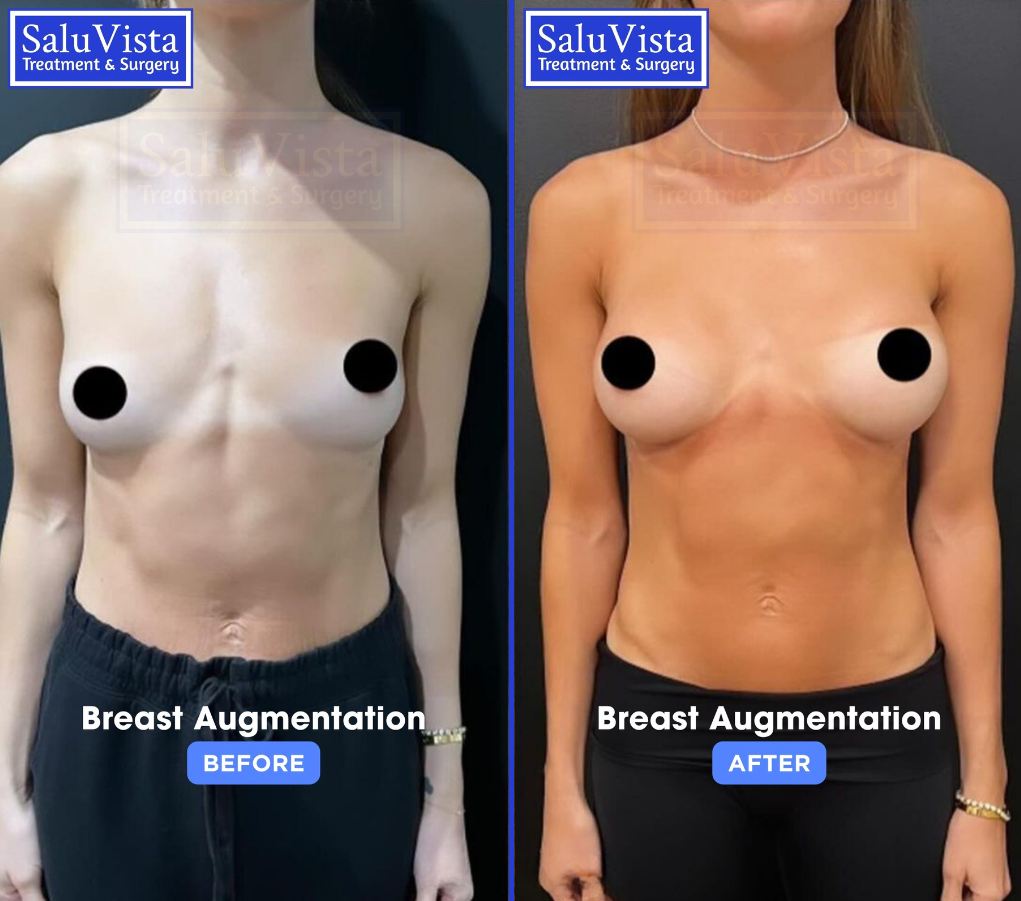
This matters more than the price. Breast implants are not lifetime devices. Many people keep the same implants problem-free for well over a decade, but implants can need revision or replacement over time, and the chance of needing further surgery rises the longer you have them. The usual reasons are capsular contracture (firm scar tissue) or rupture. Sometimes it's just a change of mind.
We won't guarantee a specific aesthetic outcome or a fixed lifespan, because no honest surgeon can, so plan for the possibility of future maintenance and routine monitoring rather than a one-and-done result. Professional bodies such as the British Association of Aesthetic Plastic Surgeons (BAAPS) publish patient guidance on implants and follow-up. It's worth reading alongside this page.
Cost in Turkey
At SaluVista, breast augmentation starts from £2,680 / $3,605 (≈ €3,160). Two honest notes go with that figure. First, the implant itself is an extra cost, because its type, brand and size are selected specifically for you, and second, if you want augmentation combined with an uplift, that starts from a different figure (from £3,360, implant extra). These are owner-approved "from" guide prices only. Your real number arrives as a transparent, itemised quote after your individual assessment.
Price should never decide this. For how Turkey pricing is built and what "all-inclusive" should really include, see our plastic surgery cost in Turkey guide.
Want an honest, personalised recommendation?
Share your goals and a few details, and a specialist gives you a straight answer: implants, fat transfer, a combined lift, or waiting, plus a transparent quote after assessment.
Chat on WhatsApp →Frequently asked questions
How much does breast augmentation cost in Turkey?
At SaluVista breast augmentation starts from £2,680 / $3,605 (approximately €3,160), with the implant itself an extra cost because the type, brand and size are chosen for you. This is a guide only; your final figure comes as a transparent, itemised quote after an individual assessment with your surgeon.
Implants or fat transfer — which is better?
Neither is universally better. Implants give a reliable, larger and more predictable increase in size and are suited to bigger changes. Fat transfer uses your own liposuctioned fat for a modest, natural-feeling result with no implant, but the volume gain is limited and some fat is reabsorbed. The right choice depends on your anatomy, how much size you want and your priorities, decided with your surgeon.
How long do breast implants last?
Modern breast implants are not lifetime devices. Many stay problem-free for well over a decade, but they can need revision or replacement over time, and the risk of needing further surgery rises the longer you have them. There is no guaranteed lifespan, so plan for possible future maintenance rather than a one-off, permanent result.
Is breast augmentation in Turkey safe?
It can be, when performed by a board-certified plastic surgeon in an accredited facility with proper screening and follow-up. Like any surgery it carries risks including bleeding, infection, changes in sensation and capsular contracture. Safety depends on the surgeon and set-up, not the country. At SaluVista you speak with your surgeon before travelling and a qualified human makes the final decision.
Can I breastfeed after breast augmentation?
Many women can breastfeed after augmentation, but it is not guaranteed. The incision type and implant placement can affect milk ducts and nipple sensation. If breastfeeding in future matters to you, tell your surgeon so the technique can be planned with that in mind.
How long is the recovery after breast augmentation?
Most people take about 1–2 weeks off light work, wear a supportive bra for several weeks, and avoid heavy lifting and vigorous exercise for roughly 4–6 weeks. Swelling settles over weeks to a few months as implants settle into place.
Can I breastfeed afterwards?
Many women can, but it isn't guaranteed. Incision type and implant placement can affect milk ducts and nipple sensation. If future breastfeeding matters to you, tell your surgeon so the technique can be planned accordingly.
This article is general information, not medical advice, and does not replace a consultation with a qualified surgeon. Individual results, risks and recommendations vary, and no specific aesthetic outcome is guaranteed. Always discuss your options and risks with a medical professional.