
Plastic surgery
Thigh lift in Turkey: an honest 2026 guide to scars, cost & candidacy
Medically reviewed by Dr. Mehmet Yılmaz
Quick answer
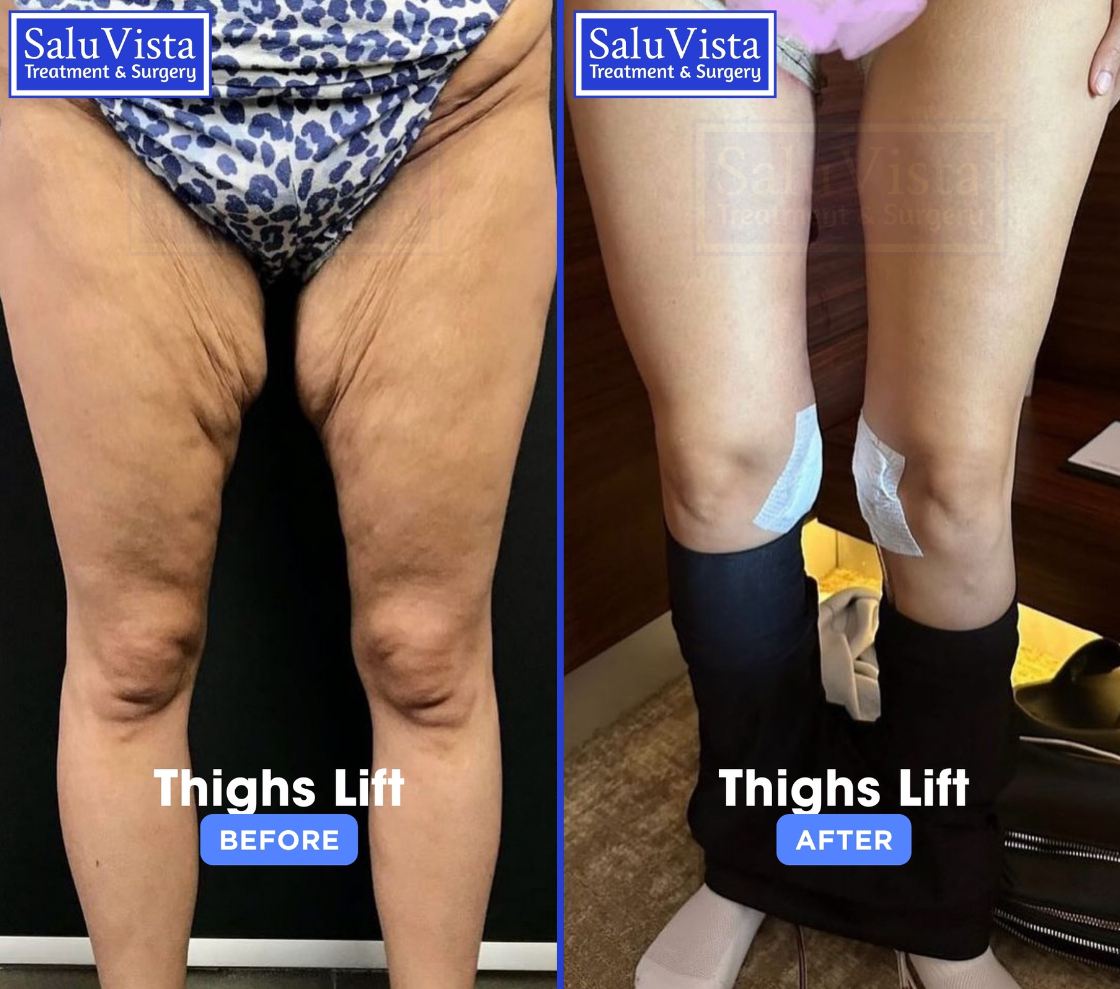
A thigh lift (thighplasty) removes loose, hanging skin from the inner or outer thigh to create a firmer, smoother contour: something exercise and liposuction alone cannot do once skin has lost its elasticity. At SaluVista in Istanbul a thigh lift starts from £3,520 (≈ €4,150), confirmed by an itemised quote after assessment. The trade-off is a permanent scar.
- What it fixes: loose, sagging thigh skin, usually after major weight loss, not simply fat.
- Inner vs outer: a medial (inner) lift is most common; an outer lift often forms part of a lower body lift.
- A permanent scar in the groin crease, sometimes down the inner thigh, is part of the deal. An honest surgeon says so up front.
- Recovery is staged: careful weeks in compression, with swelling settling over months.
In this guide
If major weight loss has left you with loose skin that chafes, rubs or hangs on the inside of your thighs, and no amount of squats will tighten it, you may be looking at a thigh lift. It's one of the body procedures we're most often asked about in our plastic and aesthetic surgery programme, and one where honesty about scars matters most. This guide explains what thighplasty can and can't do, so you can decide with clear eyes.
It's general information to help you prepare, not medical advice.
What a thigh lift actually does
A thigh lift, or thighplasty, is a surgical operation that removes excess, sagging skin from the thigh and tightens the remaining tissue so the leg sits firmer and smoother. It's designed for a structural problem that training cannot solve: skin that was stretched for years (usually by significant weight loss, sometimes by ageing) and has lost the elasticity to shrink back on its own.
Skin removal, not fat loss
The key point to understand is that a thigh lift is not a weight-loss operation and not a fat operation. When skin no longer retracts, removing fat alone (with liposuction) can leave the area looking looser, not tighter. A thigh lift removes the loose skin itself and re-drapes what remains, often with some liposuction added to refine the contour at the same time.
Firmer contact surfaces
Beyond appearance, many people seek a thigh lift for a practical reason: hanging inner-thigh skin can chafe, trap moisture and cause rashes or discomfort when walking or exercising. Removing it can make movement more comfortable, not just change how the thigh looks.
A thigh lift trades loose skin for a firmer contour and a scar. It won't slim a thigh that is mainly fat, and it isn't a shortcut to weight loss.
Inner vs outer thigh lift — which type
"Thigh lift" covers more than one operation. The right one depends on where your loose skin sits and how much there is. Your surgeon matches the technique to your body, never the other way round.
- Inner (medial) thigh lift — the most common type. It targets loose skin on the inside of the thigh, typically after weight loss. For milder cases the scar hides in the groin crease; for larger corrections it may extend down the inner thigh.
- Outer (lateral) thigh lift — addresses loose skin on the outside and front of the thigh and hip. Because this skin is anchored differently, an outer lift usually needs a longer scar around the hip line, and is frequently done as part of a lower body lift.
- Vertical (extended) thigh lift — for very loose skin along the whole length of the inner thigh, using a longer vertical scar down the leg in exchange for a fuller correction.
If your loose skin circles the hips, buttocks and thighs together after major weight loss, a single thigh lift may not be the best answer: a broader post-bariatric body contouring plan may serve you better. That's a conversation to have at assessment, not a decision to make from a price list.
Thigh lift vs liposuction: what's the difference?
This is the question that saves people money and disappointment. The short version: liposuction removes fat; a thigh lift removes loose skin. They solve different problems, and are often used together rather than instead of each other.
| Thigh lift (thighplasty) | Liposuction | |
|---|---|---|
| Removes fat | Some, as part of contouring | Yes — this is its main job |
| Removes loose skin | Yes | No |
| Tightens sagging tissue | Yes | No |
| Leaves a scar | Yes, in the groin and/or inner thigh | Only tiny cannula marks |
| Best for | Loose, hanging skin after weight loss | Localised fat with good skin tone |
| Recovery | Longer (major surgery) | Shorter |
If your skin still snaps back well and your concern is a stubborn pocket of fat, liposuction alone may be enough, and a responsible surgeon will tell you so rather than sell you a bigger operation. But if the skin hangs and no longer retracts, no amount of liposuction will tighten it, and a thigh lift is the honest answer.
Who is a good candidate?
Thighplasty gives its best and safest results for people who are:
- at a stable, healthy weight, because a thigh lift refines a body close to its goal and doesn't replace weight loss;
- non-smokers, or willing to stop well before and after surgery, because smoking seriously impairs healing in the thigh, where wounds are already under tension;
- bothered by loose, hanging thigh skin (often after major or bariatric weight loss) that diet and exercise cannot resolve;
- in good general health, with realistic expectations about scars and recovery.
When surgery should wait. If you're still actively losing weight, or your weight hasn't been stable for several months, a responsible surgeon will usually advise waiting, because further weight change can loosen the result again. Being told "not yet" is good care, not a lost sale.
For body-contouring procedures after weight loss at SaluVista, your surgeon is Assoc. Prof. Emre G., an academic plastic surgeon whose work includes body contouring and post-bariatric surgery. A qualified human — not an algorithm — examines your case and makes the final decision. You speak with your surgeon before you travel. Sometimes the right answer is a smaller procedure, or none at all.
Scars: the honest truth
Every thigh lift leaves a permanent scar. There's no way around it. Removing skin means a stitched incision, and the thigh is one of the more demanding areas for scars to settle well.
An inner thigh lift places its scar in the groin crease, where clothing and underwear usually hide it; for larger corrections the scar may run down the inner thigh. An outer thigh lift leaves a longer scar around the hip. Because the thigh is a mobile area under constant tension from walking and sitting, thigh scars can be slower to mature and more prone to widening or stretching than scars elsewhere on the body. Your surgeon will explain where your scars will fall and how to care for them.
You are trading skin that hangs and chafes for a firmer thigh and a scar you can usually keep hidden. That trade is worth it for many people after weight loss. Only you can decide if it's worth it for you.
Anyone promising a "scarless" thigh lift is not being straight with you. How a scar matures depends partly on your skin and genetics, which no surgeon can fully control.
Recovery, step by step
A thigh lift is major surgery, and recovery is staged over weeks to months. Rushing it risks the result. Because the incisions sit near the groin, patience protects your healing. Here's a realistic picture:
First days
You may stay in hospital for a night or two. Movement is deliberately gentle and limited at first to protect the groin incision, and you'll be shown how to sit, stand and get in and out of bed without straining the repair. Drains are sometimes used. Tightness and discomfort are normal and managed with medication.
Weeks one to six
You wear compression garments to support healing and manage swelling. Most people take about two to three weeks off a desk job, and longer for physical or on-your-feet work. Prolonged walking, heavy lifting and strenuous exercise are avoided for around six weeks, and you follow your surgeon's guidance on gradually returning to activity.
Months
Swelling settles gradually, and the final contour appears over several months as tissues soften and the scar matures. The thigh you see at six weeks is not the thigh you'll have at six months. Throughout, SaluVista keeps you connected to your care team for follow-up.
Cost of a thigh lift in Turkey
Turkey is a leading destination for body-contouring surgery because it pairs experienced, board-certified plastic surgeons with prices well below UK private rates. At SaluVista, our transparent guide "from" prices for related procedures are:
- Thigh lift — from £3,520 (≈ €4,150)
- Arm lift (brachioplasty) — from £2,785
- Buttock lift — from £3,990
- 360° belt lipectomy (circumferential, after major weight loss) — from £5,095
- Liposuction — from £2,205 for a single area
These are guide prices only. Your final figure is confirmed in a transparent, itemised quote after an individual assessment, because whether you need an inner or outer lift, how much skin is removed, and any combined procedures such as liposuction all change the total. We won't quote you a flat number before a surgeon has seen your case. That would be guessing. For how body-surgery pricing is built up component by component, the liposuction cost guide explains it in detail.
Wondering if a thigh lift — or something smaller — is right for you?
Share a few details and photos securely, and Assoc. Prof. Emre G. gives you an honest, personalised recommendation, including if liposuction alone, a wider body-contouring plan, or waiting would serve you better.
Get a free assessment →Safety & combining procedures
A thigh lift is frequently combined with other body procedures after weight loss, most often liposuction for contour, an arm lift, or as part of a lower body lift that also addresses the buttocks and outer thighs. For patients after major or bariatric weight loss, it often sits within a wider post-bariatric body contouring plan staged across one or more visits.
Combining is only appropriate when it's safe for you. Longer operating times and larger procedures carry more risk, so a good surgeon may advise staging your surgery rather than doing everything at once. Safety always comes before convenience or a single-trip saving. The UK's NHS guide to cosmetic procedures and the British Association of Aesthetic Plastic Surgeons (BAAPS) both stress choosing a properly qualified surgeon and understanding the risks before you commit. We wholeheartedly echo that.
How SaluVista works. Screening and booking happen in the app; you speak with your surgeon before travelling; and a qualified human makes the final decision on whether (and how) to operate. No pressure, no rushing.
Frequently asked questions
How much does a thigh lift cost in Turkey?
At SaluVista a thigh lift starts from £3,520 (about €4,150). This is a guide 'from' price; your exact cost is confirmed in a transparent, itemised quote after an individual assessment, because whether you need an inner or outer lift, how much skin is removed, and any combined procedures such as liposuction all change the final figure.
What is the difference between an inner and an outer thigh lift?
An inner (medial) thigh lift removes loose skin from the inside of the thigh and is the most common type, usually after weight loss, with the scar hidden in the groin crease. An outer (lateral) thigh lift addresses loose skin on the outside and front of the thigh and hips, and is often done as part of a lower body lift with a longer scar around the hip line.
Does a thigh lift leave a scar?
Yes, always. Removing skin means a permanent scar. An inner thigh lift leaves a scar in the groin crease, sometimes extending down the inner thigh for larger corrections. An outer thigh lift leaves a longer scar around the hip. Thigh scars can be slower to settle than elsewhere and may widen. A good surgeon is honest about this trade-off before you commit.
Who is a good candidate for a thigh lift?
Good candidates are at a stable, healthy weight, are non-smokers or willing to stop, and have loose, hanging thigh skin that diet and exercise cannot fix, typically after major weight loss. If your main issue is fat rather than skin, liposuction alone may suit you better. A qualified surgeon makes the final decision after examining you individually.
How long is recovery after a thigh lift?
Most people take about two to three weeks off a desk job and longer for physical work. You wear compression garments, limit walking and avoid strenuous exercise for around six weeks, and sit and move carefully to protect the groin incision. Swelling settles gradually over weeks to months, with the final contour visible after several months.
Can a thigh lift be combined with other procedures?
Often, yes. A thigh lift is commonly combined with liposuction for contour, or done as part of a lower body lift or wider post-bariatric body contouring plan after major weight loss. Combining is only appropriate when it is safe for you; longer operating time carries more risk, so a surgeon may advise staging surgery instead. Safety comes before convenience.
This article is general information, not medical advice, and does not replace a consultation with a qualified surgeon. Individual results, risks and recommendations vary, and no specific aesthetic outcome can be guaranteed. Always discuss your options and risks with a medical professional.