
Plastic surgery
Tip plasty: refining just the tip of the nose
Medically reviewed by Dr. Mehmet Yılmaz
Quick answer
Tip plasty is a focused nose operation that reshapes only the tip (refining, lifting, narrowing or better defining it) while leaving the bridge, bone and overall profile largely unchanged. It suits people whose bridge already looks balanced and whose single concern is a drooping, bulbous or poorly defined tip, rather than the whole nose.
- It's a limited form of rhinoplasty that works on the soft cartilage of the tip, not the nasal bones.
- Good candidates have a balanced bridge and profile but are troubled specifically by the tip.
- If the bridge, a hump or overall size also need changing, a full rhinoplasty is usually the better fit.
- The tip is the slowest part of the nose to settle. Final shape can take months to appear.
In this guide
If you like your nose from the side but wish the tip were a little neater (less droopy, less bulbous, better defined), you may not need a full nose job. Tip plasty (also called tip rhinoplasty or a tip refinement) targets only the nasal tip and leaves the rest of the nose alone, and this guide explains what it can and can't do, how it differs from a full rhinoplasty, and how to tell which one you actually need.
It's general information to help you prepare, not medical advice.
What tip plasty is
The tip of the nose is shaped mostly by two curved pieces of soft cartilage (the lower lateral cartilages) and the skin over them, not by bone. Tip plasty reshapes those cartilages to change how the tip looks. Depending on your concern, a surgeon can:
- Refine a bulbous or "boxy" tip so it looks narrower and more defined.
- Lift a drooping tip that hangs down, especially when you smile (a "plunging" tip).
- Rotate or project the tip slightly to improve the angle between nose and lip.
- Even out a tip that looks asymmetric or pinched.
Crucially, tip plasty does not touch the nasal bones or the bridge. If you have a hump on the bridge, a wide bony base, or want your whole nose smaller, tip plasty alone won't achieve that: that's rhinoplasty territory.
Tip plasty is a scalpel aimed at one problem. If the problem is bigger than the tip, a bigger operation is the honest answer. Not a smaller one stretched to do a job it can't.
Tip plasty vs full rhinoplasty
The two operations overlap but are not the same. A full rhinoplasty can reshape the entire nose (bridge, bone, hump, width and tip together) to change the overall profile. Tip plasty is deliberately narrow: it addresses only the tip. That makes it a smaller operation. But it also means it can only fix a smaller set of concerns.
| Tip plasty | Full rhinoplasty | |
|---|---|---|
| What it reshapes | The nasal tip only | The whole nose, including bridge & bone |
| Works on bone? | No — soft cartilage only | Often yes (hump, bony width) |
| Fixes a bridge hump? | No | Yes |
| Scope of change | Subtle, localised | Can be more dramatic |
| Typical operating time | Shorter | Longer |
| Best for | Balanced bridge, tip-only concern | Multiple concerns or overall reshape |
A good surgeon won't sell you the smaller operation just because it sounds gentler. If your bridge and tip both need work, doing the tip alone can leave the nose looking unbalanced. If you're weighing techniques for a larger reshape, our guide to open vs closed rhinoplasty explains the surgical approaches, and if you'd rather avoid surgery entirely for a small bridge or tip tweak, non-surgical rhinoplasty covers the filler-based alternative and its limits.
Who is a candidate for tip plasty
Tip plasty tends to suit you if most of your nose already looks the way you want, and it's specifically the tip that bothers you. Common reasons people ask about it:
- A bulbous or round tip that lacks definition.
- A drooping tip, particularly one that dips when smiling.
- A tip that looks too wide, boxy or asymmetric.
- A tip that's poorly defined against an otherwise straight, balanced bridge.
You're generally less suited to tip plasty if you also want to remove a hump, straighten a crooked bridge, narrow the bony base, or make the whole nose smaller. Those need a full rhinoplasty. Thick skin over the tip can also limit how much definition is achievable, and a responsible surgeon will say so rather than over-promise.
A skilled surgeon sometimes recommends against operating, for example if your tip concern is minor, if thick skin would blunt the result, or if what you'd really need is a fuller rhinoplasty. That honesty is a sign of good care, not a lost sale. Safety and the right operation come before convenience.
At SaluVista, facial-aesthetics and rhinoplasty work is led by Assoc. Prof. Emre G., an academic plastic surgeon whose focus includes facial aesthetics and rhinoplasty. You'll speak with your surgeon before you travel, screening and booking happen in the app, and a qualified human makes the final decision about whether tip plasty (or something else) is right for you.
How tip plasty is done
Tip plasty can be performed with an open approach (a tiny bridging incision across the columella, the strip of skin between the nostrils) or a closed approach (incisions hidden inside the nostrils). The surgeon reshapes, trims or adds support to the tip cartilages, sometimes using sutures to refine and stabilise the shape, and occasionally a small cartilage graft for support. It's usually shorter than a full rhinoplasty and often done under general anaesthetic or sedation, confirmed at your assessment.
What the day looks like
Because no bone is cut, there's typically no need to break or reset anything. Many patients go home the same day or after a short stay, with a small splint or tape over the tip for a few days to support the new shape while early swelling settles.
Recovery & results
Early recovery from tip plasty is usually more comfortable than a full rhinoplasty because the bones aren't touched, so heavy bruising around the eyes is less common. A realistic, staged picture:
- Week 1: Any splint or tape is usually removed. Swelling and mild tenderness are normal; most people take about a week off.
- Weeks 2–4: You'll look presentable and the obvious swelling eases, though the tip still feels firm and slightly puffy.
- Months 2–6: The shape keeps refining as deep swelling drains slowly.
- Up to ~12 months: The tip is the last part of the nose to fully settle. Subtle swelling can linger for many months before you see the true final shape.
Patience matters here. Judging your result at two weeks is unfair to the surgery and to yourself. Our rhinoplasty recovery timeline maps the wider healing picture in more detail; tip-only recovery is generally a lighter version of the same curve.
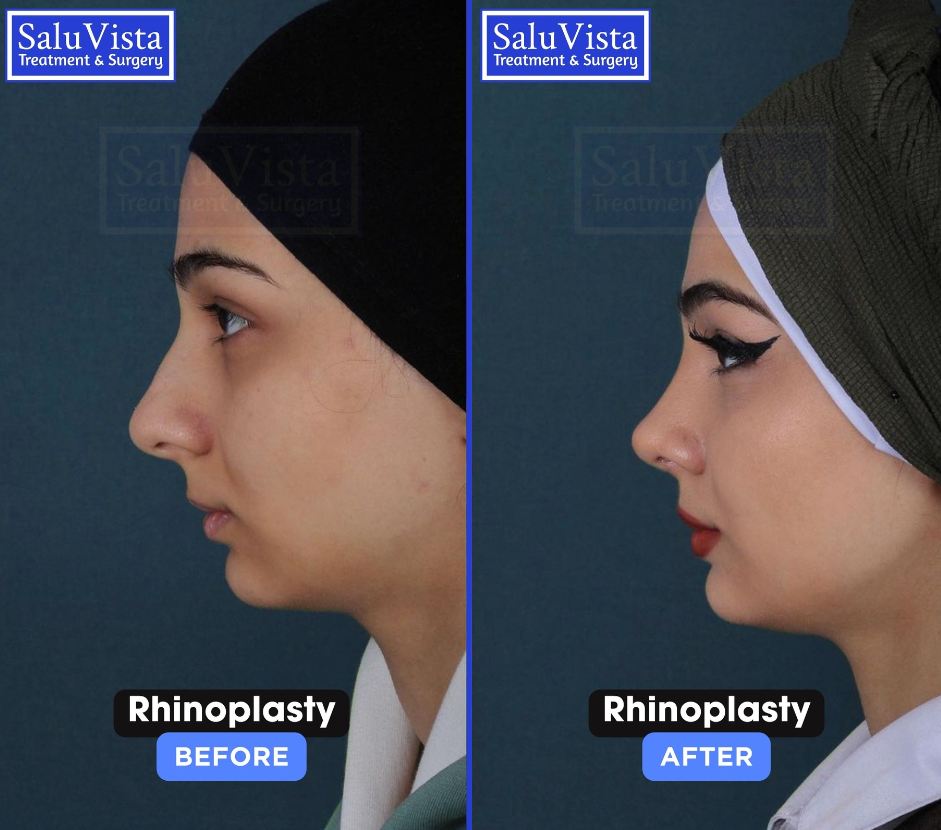
Limits & honest expectations
Tip plasty is powerful for the right, focused problem. It disappoints when asked to do too much. A few honest points:
- It can't remove a bridge hump, straighten a crooked nose, or shrink the whole nose.
- Results depend heavily on your skin thickness and cartilage. No surgeon can guarantee a specific tip shape.
- As with any nose surgery, there are real risks (bleeding, infection, asymmetry, or a result that needs revision). The NHS overview of cosmetic procedures is a level-headed primer on weighing risk and choosing a provider.
- Independent bodies such as the British Association of Aesthetic Plastic Surgeons (BAAPS) publish useful questions to ask before any nose surgery, wherever you have it done.
Combining tip plasty with other facial work is sometimes reasonable, but only when it's safe and genuinely indicated, never bundled for convenience. Explore the full range on our plastic surgery hub.
Not sure if you need a tip plasty or a full rhinoplasty?
Share a few photos and what bothers you about your nose, and a specialist gives you an honest view, including whether a smaller operation, a full reshape, or no surgery is the right call.
Get a free assessment →Cost & how we quote
Because tip plasty is a more limited operation than reshaping the whole nose, it's often quoted lower than a comprehensive rhinoplasty, which at SaluVista starts from £3,045 (≈ €3,600). There's no single fixed price for a tip refinement, though: the tip is technically demanding, and what your case needs varies. Treat any figure as a guide only. Your actual price is confirmed in a transparent, itemised quote after an individual assessment, with no pressure to proceed. Our rhinoplasty cost guide explains how nose-surgery pricing works and what an all-inclusive package should cover.
Frequently asked questions
What is tip plasty?
Tip plasty is a focused nose operation that reshapes only the tip of the nose — refining, lifting, narrowing or better defining it — while leaving the bridge and the rest of the nose largely unchanged. It is a limited form of rhinoplasty suited to people whose main concern is the tip rather than the whole nose.
How is tip plasty different from a full rhinoplasty?
A full rhinoplasty can reshape the whole nose, including the bridge, bone and overall profile. Tip plasty works only on the soft cartilage of the tip and does not touch the nasal bones. It is a smaller operation for people whose bridge and profile are already balanced and whose concern is limited to the tip.
Who is a good candidate for tip plasty?
Good candidates have a well-proportioned bridge and profile but are troubled specifically by the tip — for example a drooping, bulbous, boxy or poorly defined tip. If the bridge, hump or overall size also need changing, a full rhinoplasty is usually more appropriate. A surgeon confirms suitability at assessment, and sometimes advises against surgery.
Is tip plasty cheaper than a full rhinoplasty?
Because it is a more limited operation than a full nose reshaping, tip plasty is often quoted lower than a comprehensive rhinoplasty, which at SaluVista starts from £3,045. There is no fixed price, though — the tip is technically demanding, and your figure is confirmed only in a transparent, itemised quote after an individual assessment.
How long does recovery from tip plasty take?
Most people feel presentable within one to two weeks, and any splint or tape is usually removed within a week. The tip is the slowest part of any nose to settle, though, and subtle swelling can take several months — sometimes up to a year — to fully resolve before the final shape is seen.
Will tip plasty change my breathing?
Tip plasty is usually done for appearance and is not primarily a breathing operation. It should not normally worsen breathing when done well, but any nose surgery can affect airflow. If you have a blocked nose or a deviated septum, tell your surgeon so function is assessed alongside appearance.
This article is general information, not medical advice, and does not replace a consultation with a qualified surgeon. Individual results and recommendations vary, and no specific aesthetic outcome can be guaranteed. Always discuss your options and risks with a medical professional; a qualified human surgeon makes the final decision.
Sources & further reading