Plastic surgery
Facial fat transfer in Turkey: restoring volume with your own fat
Medically reviewed by Dr. Mehmet Yılmaz
Quick answer
Facial fat transfer takes a small amount of your own fat by gentle liposuction, purifies it, and re-injects it in tiny amounts to restore lost volume in areas like the cheeks, temples and tear troughs. Because it uses your own living tissue, some of the fat becomes a lasting part of your face while some is reabsorbed early on.
- It uses your own fat: no synthetic filler, so no risk of allergy to a foreign substance.
- Not all the fat survives: the portion that establishes a blood supply can last many years, though your face still ages naturally.
- At SaluVista, facial fat transfer starts from £1,575 (≈ €1,860), confirmed by an itemised quote after assessment.
- It is surgery, not a lunchtime injectable. The donor site needs liposuction and recovery.
In this guide
As we age, the face doesn't just develop lines. It loses volume. Fat pads in the cheeks and temples deflate and descend, hollows appear under the eyes, and the face can look tired or gaunt even when nothing is "wrong". Facial fat transfer (also called facial fat grafting or lipofilling) addresses that loss directly, by moving fat from where you have a little to spare to where the face has thinned. Because the material is your own tissue, it can look and feel natural and, for the fat that survives, last for years.
This is general information to help you prepare for a conversation with a surgeon, not medical advice.
What facial fat transfer is
Facial fat transfer is a surgical procedure that harvests a modest amount of your own fat, processes it, and re-injects it into the face to replace lost volume. It's a form of autologous grafting (autologous simply means the tissue comes from your own body), which is why there is no risk of an allergic reaction to a foreign filler.
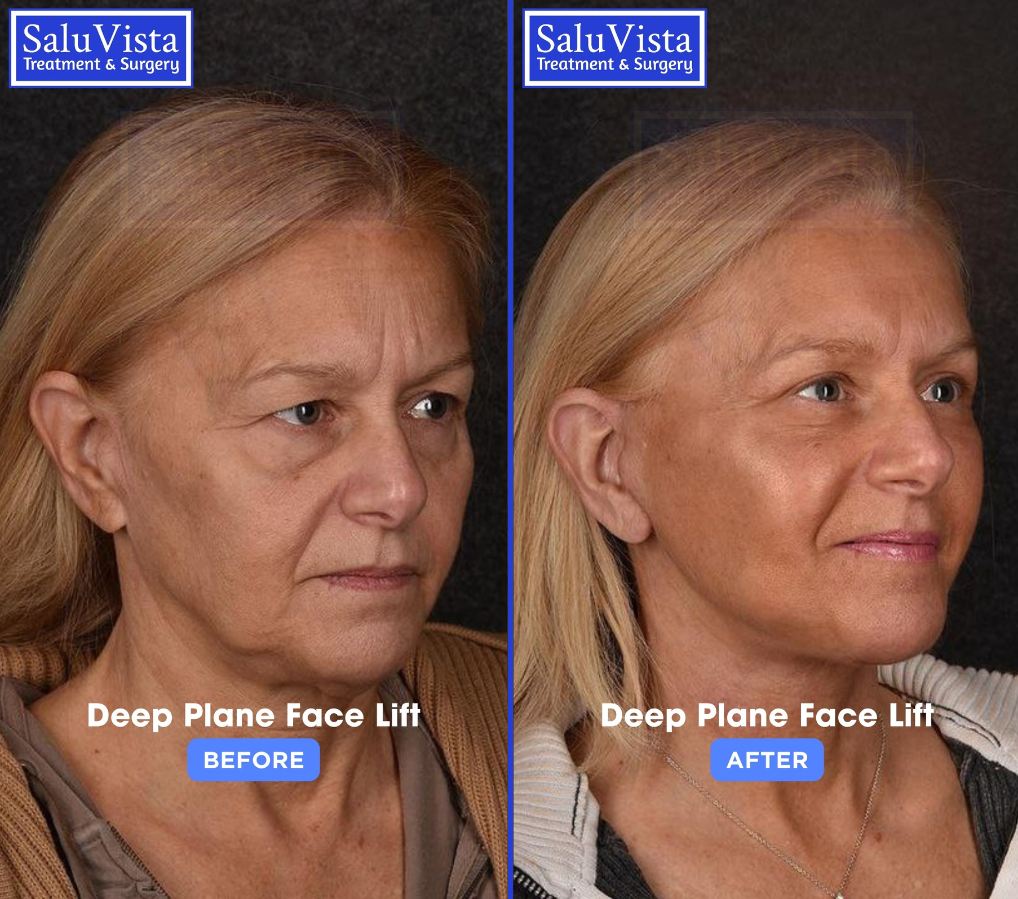
It's worth being clear about what fat transfer is and isn't. It restores volume and softens hollows; it does not tighten significantly loose skin or lift a heavy, sagging face the way a facelift does. In fact, the two are often complementary: a surgeon may combine a lift to reposition sagging tissue with fat grafting to re-inflate areas that have deflated, but only when combining is safe and appropriate for you.
Ageing thins and empties the face as much as it wrinkles it. Fat transfer treats the emptiness (the loss of volume) rather than the surface lines.
How the procedure works
The technique follows three careful stages, usually under sedation or light general anaesthesia:
1. Harvest
A small volume of fat is removed by gentle, low-pressure liposuction from a donor area where most people have a little to give, commonly the lower abdomen, flanks or inner thighs. Only a modest amount is needed for the face. So the donor site is minor compared with body contouring.
2. Purify
The harvested fat is processed (typically by allowing fluid, blood and anaesthetic to separate out) so that clean, healthy fat cells remain. Careful, gentle handling at this stage matters. Fat cells are delicate, and how they're treated influences how much survives.
3. Graft
Using fine cannulas, the surgeon places the purified fat in tiny amounts across many small passes, building volume in layers. Spreading it out this way gives each droplet the best chance of picking up a blood supply from the surrounding tissue. Because some fat is expected to reabsorb, surgeons often slightly overfill, so the face looks fuller than the final result at first.
Why the small-droplet technique matters: transferred fat has no blood supply of its own at first. It survives only if it's close enough to living tissue to be nourished until new vessels grow in. Placing fat in fine, dispersed amounts (rather than large clumps) is what gives more of it a chance to take.
Which areas it treats
Fat transfer is versatile because it can add volume almost anywhere the face has thinned:
- Cheeks & mid-face — restoring the youthful fullness that deflates with age.
- Temples — softening the hollowing at the sides of the forehead.
- Tear troughs / under-eyes — gently filling the hollow that creates a tired, shadowed look, an area also discussed in our guide to under-eye bag treatment.
- Jawline & chin — improving definition and contour.
- Lips & nasolabial folds — subtle softening of the lines between nose and mouth.
- Acne scars & contour irregularities — filling depressed areas to smooth the surface.
Interestingly, fat transfer and buccal fat removal can be two sides of the same sculpting philosophy: one adds volume where the face has thinned, the other removes a discrete pad to slim the lower cheek. A good surgeon assesses your face as a whole. They may then recommend one, the other, both, or neither.
Longevity & how much lasts
This is the question everyone asks. The honest answer has two parts. In the first few months, some of the grafted fat that doesn't establish a blood supply is naturally reabsorbed by the body. This is expected and normal. The fat that does take root becomes a living, permanent part of your face, supplied by its own new blood vessels.
That surviving portion can last for many years. But two caveats matter for honest expectations:
- Survival varies. How much fat takes depends on your tissue, the area treated, the surgeon's technique and how you heal. No responsible surgeon can promise you an exact percentage.
- Your face keeps ageing. Fat transfer resets some lost volume, but it doesn't stop the clock: the face continues to change naturally over the years, and some people choose a top-up in future.
Because a portion reabsorbs early, a small number of patients opt for a second, smaller session once the result has settled. Your surgeon will discuss whether that's likely to be relevant for you.
Fat transfer vs dermal fillers
People often weigh facial fat transfer against injectable dermal fillers. They overlap in goal (restoring volume) but they're quite different in practice.
| Facial fat transfer | Dermal fillers | |
|---|---|---|
| Material | Your own fat (autologous) | Synthetic gel (e.g. hyaluronic acid) |
| Procedure | Surgery with liposuction donor site | In-clinic injections, no surgery |
| Allergy risk | None — it's your own tissue | Reaction to a foreign substance possible |
| Longevity | Surviving fat can last years | Temporary; typically months to a year+ |
| Volume achievable | Larger, for widespread volume loss | Best for smaller, targeted areas |
| Recovery | Swelling & bruising over weeks | Minimal downtime |
| Reversible | No | Some fillers can be dissolved |
Neither is simply "better". Fillers are quick, adjustable and involve little downtime, which suits smaller, targeted changes. Fat transfer is a bigger commitment but offers your own natural tissue and potential long-term results, which suits more extensive volume loss. The right answer depends on how much volume you need and how you feel about surgery, a decision to make with a surgeon, not from a price list.
Who it suits — and who it doesn't
Good candidates are generally in good health, non-smoking or willing to stop (smoking impairs the blood supply that grafted fat depends on to survive), with realistic expectations and enough donor fat to harvest. Very lean patients sometimes have limited fat to give. A surgeon will assess this honestly.
Our academic plastic surgeon Assoc. Prof. Emre G., whose work spans facial aesthetics and body contouring, approaches the face as a whole, and a responsible plan sometimes means advising a smaller change, a different procedure, or no surgery at all. You can read more about our surgeons and how they assess each case.
A good surgeon will sometimes tell you that fat transfer isn't the right answer. Sometimes fillers, a lift, or simply doing nothing suits you better. That honesty is a feature, not a failing.
Recovery & results
Recovery involves two areas: the face and the small donor site.
- The face swells and may bruise. Because surgeons slightly overfill, you'll look fuller than the final result at first. This is expected and settles.
- The donor site feels mildly sore or tender, like a minor liposuction area, and is easily managed.
Most visible bruising fades over one to two weeks. Swelling refines more gradually (over several weeks to a few months) and the true, settled result appears once early reabsorption has finished and the surviving fat is established, usually by around three to six months. Patience matters here. Judging the outcome in the first fortnight, while the face is still swollen and overfilled, is misleading. Your surgeon will give you aftercare guidance, including avoiding pressure on the treated areas early on.
Cost in Turkey
At SaluVista, facial fat transfer starts from £1,575 (≈ €1,860). That's a guide "from" price, not a flat fee: the final figure depends on how many areas are treated and how much fat is needed, and is confirmed in a transparent, itemised quote after an individual assessment with your surgeon.
If you're also considering related facial work, our facelift cost guide and the broader plastic surgery hub set out how SaluVista prices procedures. Cost should never be the only factor: what matters most is a properly qualified surgeon, honest assessment and safe, unrushed care. With SaluVista you speak with your surgeon before you travel, screening and booking happen in the app, and a qualified human makes the final decision.
Wondering if fat transfer suits your face?
Share your goals and a few photos, and a specialist gives you an honest, personalised view, including whether a different option, or none at all, would serve you better.
Get a free assessment →Frequently asked questions
What is facial fat transfer?
It takes a small amount of your own fat by gentle liposuction from an area such as the abdomen or thighs, purifies it, and injects it in tiny amounts to restore lost volume in the cheeks, temples, tear troughs, jawline or lips. Because it uses your own living tissue, there's no risk of allergy to a foreign filler.
How long does facial fat transfer last?
Not all transferred fat survives — in the first few months some is naturally reabsorbed, and the fat that establishes its own blood supply becomes a lasting part of your face. That surviving portion can last for many years, though your face still ages naturally. No responsible surgeon can guarantee an exact survival percentage or a specific outcome.
How much does it cost in Turkey?
At SaluVista facial fat transfer starts from £1,575 (≈ €1,860). This is a guide 'from' price only; your final figure is confirmed in a transparent, itemised quote after an individual assessment, because the areas treated and the amount of fat needed vary from person to person.
Is fat transfer safer than dermal fillers?
Fat transfer uses your own tissue, so there's no risk of allergy to a synthetic filler and results can be long-lasting. But it's a surgical procedure with liposuction at the donor site, so it involves more recovery than an injectable. Neither is simply safer — it depends on how much volume you need and your goals, decided with a surgeon.
What is the recovery like?
Expect swelling and some bruising in the treated areas and mild soreness at the donor site. Surgeons often slightly overfill to allow for reabsorption, so the face looks fuller at first. Most visible bruising settles over one to two weeks, while swelling refines over several weeks to a few months as the final result appears.
How do I find out if it's right for me?
Start with an honest assessment of your facial volume, skin and donor fat. Get the SaluVista app or message us for a free, personalised review of your options — including whether another procedure or none at all fits you better.
This article is general information, not medical advice, and does not replace a consultation with a qualified surgeon. Individual results and recommendations vary, and no specific aesthetic outcome can be guaranteed. Always discuss your options and risks with a medical professional.
Sources & further reading
- NHS — Cosmetic procedures: independent guidance on considering, and choosing a practitioner for, cosmetic treatments.
- ISAPS — International Society of Aesthetic Plastic Surgery: global body for board-certified aesthetic plastic surgeons.