Plastic surgery
Under-eye bag treatment in Turkey: surgery vs fillers
Medically reviewed by Dr. Mehmet Yılmaz
Quick answer
The best treatment for under-eye bags depends on their cause. When a bulge comes from herniated fat pads, lower blepharoplasty (lower-eyelid surgery) gives the most lasting result by repositioning or removing that fat; when the issue is a hollow tear-trough shadow rather than a true bag, a filler or fat transfer may suit better instead. A surgeon decides which applies to you.
- Surgery tackles the fat that creates a genuine bulge. That's a one-off, long-lasting change.
- Fillers add volume to a hollow to soften a shadow. The effect is temporary, lasting months to a year or two.
- At SaluVista, lower-eyelid surgery starts from £1,680 (≈ €1,980), confirmed by an itemised quote after assessment.
- A good surgeon may advise a smaller change — or no surgery at all — if that serves you better.
In this guide
Tired-looking eyes are one of the most common reasons people explore facial surgery, and one of the most misunderstood: "bags" can mean several different things, and the right fix for one person is the wrong fix for another. This guide explains what actually causes under-eye bags, when lower blepharoplasty makes sense, when a filler is the smarter choice, and how honest pricing works at SaluVista. It's part of our wider plastic surgery resources.
It's general information to help you prepare for a proper consultation, not medical advice.
What causes under-eye bags
The area under the eye is delicate. A thin layer of skin sits over small pockets of fat that cushion the eyeball, held back by a supporting membrane, and several things can make this region look puffy, shadowed or tired, though they don't all have the same solution.
Herniated fat pads
With age, the membrane holding those fat pockets weakens, and the fat pushes forward: a true "bag" that bulges, often more noticeable in the morning or when you're tired. This is the classic case. Surgery addresses the root cause.
Tear-trough hollowing
Sometimes the bag isn't a bulge at all. It's a shadow cast by a groove (the tear trough) where the lower lid meets the cheek. As mid-face volume descends with age, this hollow deepens. Here, adding volume, not removing it, is usually the answer.
Skin, fluid and lifestyle
Loose or crepey skin, fluid retention, allergies, poor sleep and genetics all play a part, and puffiness that comes and goes with salt, alcohol or a bad night is not the same as a fixed anatomical bag, and it rarely needs surgery. The NHS guide to cosmetic procedures is a sensible starting point for weighing whether any intervention is right for you.
Why the cause matters so much: putting filler under a genuine protruding fat bag can make it look heavier, while removing fat from a hollow eye can make it look more skeletal. Correctly identifying which problem you have is the single most important step. That's why an in-person assessment beats any online quiz.
Your treatment options
Lower blepharoplasty (surgery)
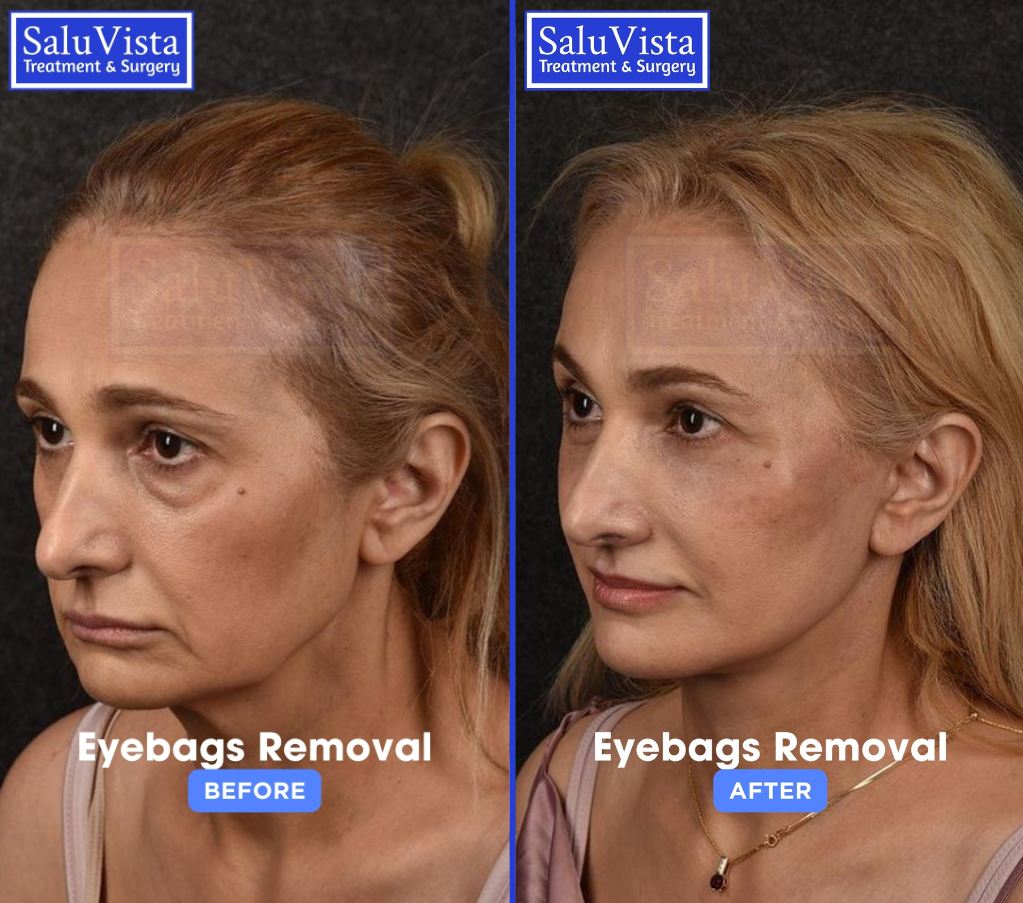
Lower-eyelid surgery repositions or removes the herniated fat and, where needed, tightens loose skin, and it's the definitive option for true fat bags with a long-lasting, one-off result. Because it's real surgery around the eye, it belongs in the hands of an experienced plastic surgeon.
Dermal fillers
A hyaluronic-acid filler placed in the tear trough adds volume to soften the shadow beneath a mild bag, and it's non-surgical, quick and reversible in the sense that the effect fades over time (typically months to a year or two), after which it can be repeated. Filler doesn't remove fat, so it won't flatten a prominent bulge.
Facial fat transfer
For hollowing, some surgeons prefer transferring a small amount of your own fat rather than a synthetic filler, aiming for a soft, natural correction, and we cover this in our facial fat transfer guide. It's a surgical option and, like all of these, only suits certain patients.
Surgery vs fillers compared
| Lower blepharoplasty | Tear-trough filler | |
|---|---|---|
| Best for | True bulging fat bags | Hollow / shadow, mild bags |
| What it does | Removes or repositions fat; can tighten skin | Adds volume to smooth the groove |
| Surgical? | Yes | No |
| Longevity | Long-lasting, one-off | Temporary — months to a year or two |
| Downtime | Bruising/swelling ~1–2 weeks | Minimal; some short-lived swelling or bruising |
| Scarring | Hidden (inside lid or under lash line) | None |
| Reversible | No | Effect fades; can be adjusted |
Lower blepharoplasty explained
Lower-eyelid surgery is a refined, technique-sensitive operation. The goal is a rested, natural look. Never a hollowed or "pulled" one.
Transconjunctival approach
When the main issue is fat with good skin quality, the surgeon can work through an incision inside the lower lid, leaving no external scar, and the fat is trimmed or repositioned to smooth the lid-cheek junction.
Skin-muscle (subciliary) approach
When loose skin also needs removing, a fine incision is hidden just beneath the lash line, and this allows the surgeon to address both fat and excess skin, with the scar usually settling to be difficult to see.
The best eye result is one nobody can name. Friends say you look well-rested, not "done". Conservative fat handling and preserving support are what keep the lower lid looking natural.
Lower blepharoplasty is often combined with upper-eyelid surgery for a balanced refresh; our dedicated eyelid surgery in Turkey guide covers the upper lid and the full picture. At SaluVista, this work is led by Op. Dr. Caner K., a board-certified plastic, reconstructive and aesthetic surgeon with a careful aesthetic eye across facial work. Whether you travel is decided after you speak with your surgeon; a qualified human makes the final call.
Not sure if your bags need surgery or filler?
Send a photo and a few details, and a specialist gives you an honest, personalised view, including if a smaller, non-surgical option, or none at all, is the better path.
Get a free assessment →Recovery and results
Most people describe more tightness and swelling than pain, managed with simple medication. Expect bruising and swelling around the eyes for the first few days, easing noticeably over one to two weeks; subtler swelling can take several weeks to a few months to fully settle, so the final, refined result reveals itself gradually. Cold compresses, sleeping propped up and avoiding heavy exercise early all help.
- Days 1–3: peak swelling and bruising; rest, cold compresses, head elevated.
- Week 1–2: bruising fades; many return to non-strenuous routines and light social activity.
- Weeks to months: residual swelling settles and scars mature; the natural result emerges.
Recovery patterns are broadly similar to upper-lid surgery, and our eyelid surgery recovery timeline walks through it week by week, so follow your surgeon's aftercare precisely, especially around sun protection and eye hygiene.
Honest pricing
At SaluVista we publish transparent "from" prices as a guide, then confirm your figure in a clear, itemised quote after an individual assessment, because the right plan depends on your anatomy, not a template.
- Lower-eyelid surgery (lower blepharoplasty) — from £1,680 (≈ €1,980).
- Upper-eyelid surgery — from £1,315, if the upper lid also needs attention.
- Upper + lower eyelid together — from £2,415, a common balanced combination.
- Facial fat transfer — from £1,575, where hollowing is the main issue.
These are starting guide prices only, never flat quotes. Tear-trough fillers and other non-surgical treatments are priced individually after assessment, as the amount and product vary from person to person, so we won't attach a number to something that hasn't been assessed. Beware of any provider quoting a firm price before seeing you.
Price should never lead the decision. The safest, most natural result comes from matching the right technique to your anatomy, not from picking the cheapest line item. A transparent quote after assessment is how we keep that honest.
Who is a good candidate
Lower blepharoplasty tends to suit healthy adults with genuine, protruding fat bags who have realistic expectations and no eye conditions that make surgery unwise, and it's not the right tool for puffiness that fluctuates with sleep or salt, or for pure hollowing better served by volume. A thorough assessment (sometimes including checks on eye health and lid support) decides what, if anything, is appropriate.
Reputable bodies such as the British Association of Aesthetic Plastic Surgeons (BAAPS) stress choosing a qualified surgeon and taking time over the decision, and a good surgeon sometimes advises against surgery, or toward a smaller change, which is a sign of trustworthy care, not a lost sale. If you're weighing a fuller facial refresh, our plastic surgery hub links every guide in one place.
Frequently asked questions
What is the best treatment for under-eye bags?
It depends on what is causing the bags. When the bulge comes from herniated fat pads under the eye, lower blepharoplasty (lower-eyelid surgery) is the most lasting solution because it repositions or removes that fat. When the problem is a hollow tear-trough shadow rather than a true bag, a filler or fat transfer to smooth the transition may be more appropriate. A surgeon assesses which applies to you.
Do fillers or surgery work better for eye bags?
They solve different problems. Fillers do not remove a bag; they add volume to the hollow below it to blur the shadow, and results are temporary, typically lasting months to a year or two. Lower blepharoplasty addresses the fat that creates the bulge itself and is a longer-lasting, one-off surgical result. Genuine, protruding fat bags usually respond better to surgery; tear-trough hollowing may suit fillers.
How much does lower eyelid surgery cost in Turkey?
At SaluVista, lower-eyelid surgery (lower blepharoplasty) starts from £1,680 (approximately €1,980) as a guide price. Combined upper and lower eyelid surgery starts from £2,415. These are from-prices only; your final figure is confirmed in a transparent, itemised quote after an individual assessment, because the right plan depends on your anatomy and goals.
Is lower blepharoplasty painful and how long is recovery?
Most people describe more tightness and swelling than pain, which is usually managed with simple medication. Visible bruising and swelling around the eyes typically settle over one to two weeks, though subtle swelling can take several weeks to months to fully resolve. Many return to non-strenuous routines within a week or two, avoiding heavy exercise for longer as advised by the surgeon.
Will eye-bag surgery leave a visible scar?
A transconjunctival approach places the incision inside the lower eyelid, leaving no external scar, and is often used when only fat needs addressing. When loose skin must be removed, an external incision is hidden just beneath the lash line where it usually fades to be difficult to see. Your surgeon chooses the approach based on your anatomy.
Do under-eye bags come back after surgery?
Lower blepharoplasty produces a long-lasting result, and the fat pads that are removed do not typically re-form. However, the face continues to age, so skin laxity and shadows can develop gradually over the years. Good sun protection, sleep and general skin care help, but no surgery stops ageing entirely. A reputable surgeon sets realistic, honest expectations.
This article is general information, not medical advice, and does not replace a consultation with a qualified doctor or surgeon. Individual results and recommendations vary, and no aesthetic outcome can be guaranteed. Always discuss your options and risks with a medical professional; a qualified human surgeon makes the final decision.