Hair transplant
Sapphire FUE hair transplant explained (2026)
Medically reviewed by Dr. Ferhat Demiroğlu
Quick answer
Sapphire FUE is a follicular unit extraction hair transplant in which the surgeon opens the recipient channels with blades made of sapphire crystal rather than steel, and grafts are extracted individually, exactly as in classic FUE. Only the channel-opening tool changes. That very sharp, fine sapphire edge can allow smaller, precisely angled channels. It may help density and a natural look.
- Same as classic FUE for extraction, the difference is only the channel-opening step.
- Sapphire blades are hard, smooth and very sharp, so channels can be finer and closely spaced.
- It is a refinement, not a different transplant method, and not automatically "better" than DHI or classic FUE.
- The right technique depends on your hair-loss pattern, donor area and goals, decided with a qualified surgeon.
In this guide
Spend an afternoon reading about hair transplants and the term sapphire FUE shows up fast, usually with a premium label attached, though what it actually changes is narrower than the marketing suggests. Sapphire FUE is ordinary follicular unit extraction (FUE) with a single step done differently: the recipient channels are opened with sapphire-crystal blades instead of steel, and below we walk through that one difference plainly, so you can talk it over with a surgeon and know exactly what you're weighing.
Treat it as background to help you prepare, not medical advice.
What sapphire FUE actually is
A hair transplant has three broad stages: extracting individual follicular units from the donor area (usually the back and sides of the scalp), opening tiny channels in the balding recipient area, and placing the grafts into those channels. FUE, as an extraction method, means follicles are removed one by one with a small punch. Nothing is cut out in a strip.
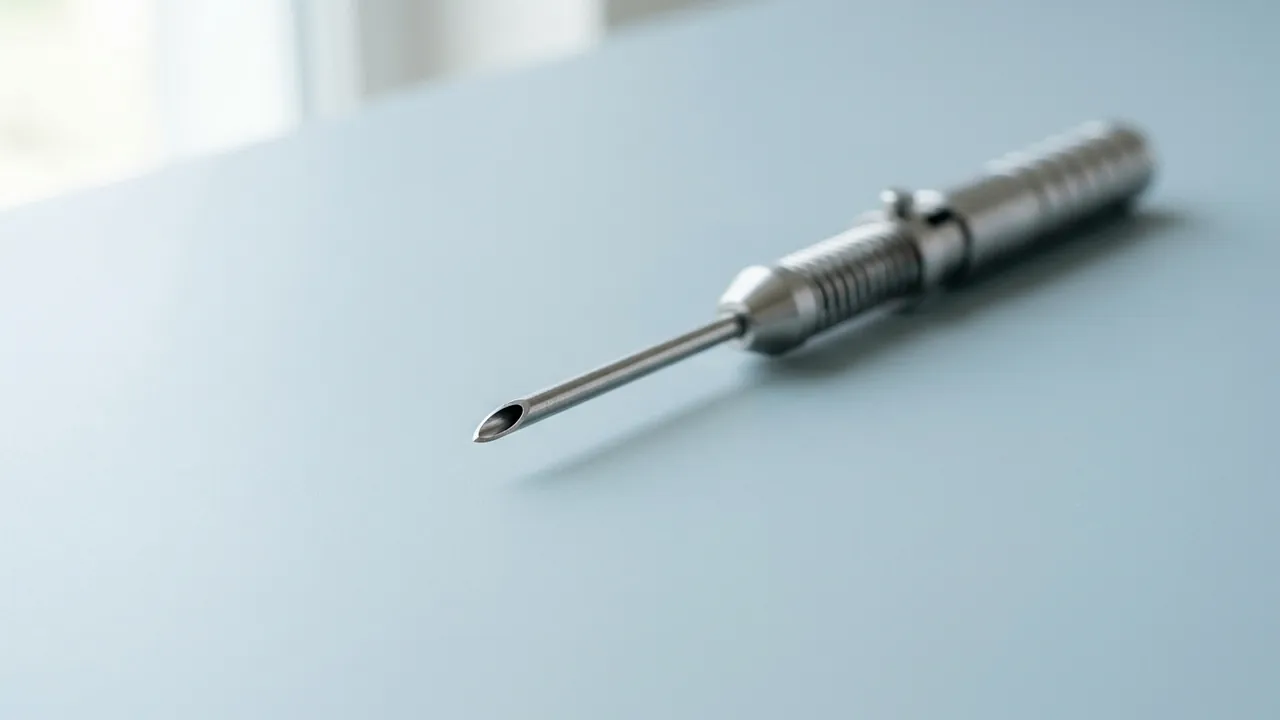
The label "sapphire FUE" points to just one of those stages: opening the channels, and rather than steel blades, the surgeon works with blades tipped in synthetic sapphire, a very hard, smooth crystalline material, to make the micro-incisions the grafts sit in. Nothing else about the FUE procedure changes. Want the bigger picture, start to finish? See our complete hair transplant guide.
Sapphire blades refine one step in the transplant, the channel-opening, not a different procedure, and I choose the tool a scalp actually needs rather than the one that sounds more premium. Our pricing is not per graft, so the technique I recommend is never shaped by a patient's budget.Dr. Ferhat Demiroğlu, Dermatology
Why the blade material matters
Sapphire is one of the hardest materials used in surgical instruments and takes an extremely fine, smooth edge that resists dulling, and in practice, surgeons who prefer it cite a few potential advantages when opening recipient channels:
- Finer channels. A sharp, smooth tip can create very small slits, so grafts can potentially be placed closer together for a dense-looking result.
- Precise angle and direction. Control over the depth, angle and direction of each channel helps the transplanted hair grow in a natural direction, important along the hairline.
- Smoother incisions. A cleaner cut may mean less tissue trauma at each site, which some surgeons feel supports comfortable healing.
These are reasons a surgeon might reach for sapphire blades, not guarantees of a specific outcome, and the International Society of Hair Restoration Surgery (ISHRS) makes the point that results depend far more on the surgeon's skill, planning and your own biology than on any single instrument. Plenty of excellent, natural results come from well-chosen steel blades in skilled hands.
Sapphire FUE vs classic FUE
Put plainly, the two are the same procedure apart from the channel tool. Classic FUE opens the channels with steel blades or needles. Sapphire FUE uses sapphire-tipped blades instead. Both extract follicles one at a time, both run under local anaesthetic, and both leave the same tiny, dot-like donor marks instead of one long linear scar.
Where sapphire blades can earn their place is in the finesse of the channels: potentially smaller, more uniform and closely packed, which can matter for a natural hairline and a dense look. How much of that you actually see comes down to the surgeon. If implanter-pen methods are also on your list, our comparison of FUE vs DHI is a useful next read, and our DHI hair transplant guide covers that technique in depth.
Side-by-side comparison
| Sapphire FUE | Classic FUE (steel) | DHI (implanter pen) | |
|---|---|---|---|
| Extraction | Individual follicles | Individual follicles | Individual follicles |
| Channel tool | Sapphire-crystal blade | Steel blade or needle | Pen opens & places together |
| Channel finesse | Very fine, closely spaced possible | Depends on blade & surgeon | Controlled by pen |
| Steps | Open channels, then place grafts | Open channels, then place grafts | Open and place in one motion |
| Donor marks | Tiny dot-like marks | Tiny dot-like marks | Tiny dot-like marks |
| Often chosen for | Dense packing, larger areas | Reliable all-round results | Hairline detail, some dense work |
Pros and cons
Potential advantages
- Fine, precise channels that can support close graft placement and natural-looking density.
- Good control of angle and direction, which helps with a natural hairline. Our hairline design guide explains why this matters.
- Efficient over larger areas, because opening channels and placing grafts are separate, coordinated stages.
Honest limitations
- It is not a different or "better" transplant in itself, since outcomes hinge on the surgeon, planning and your donor supply.
- The label is sometimes used as marketing; the blade alone does not guarantee a superior result.
- Like any FUE, it still involves shedding before regrowth and results develop gradually over months. Patience is part of the process.
Be wary of any clinic that promises "guaranteed density" or a fixed percentage of graft survival from a particular blade. Reputable surgeons discuss realistic expectations, not guarantees.
Who it suits
Sapphire FUE can be a good fit for people who:
- Have stable hair loss and a healthy donor area at the back and sides of the scalp.
- Want refined, densely packed restoration across the front and mid-scalp.
- Are having a larger session where separating channel-opening and placement is efficient.
It may matter less in a couple of cases: if your surgeon recommends an implanter-pen approach for a specific area, or if your case points to a different plan altogether. Either way, suitability isn't something you diagnose yourself. At SaluVista, hair restoration is led by Op. Dr. Caner K., a board-certified plastic surgeon with more than 10,000 surgeries, and you speak with your surgeon before you travel, and getting to grips with the causes and patterns of hair loss (NHS) also helps you set realistic goals, whichever technique you land on. If you're still deciding between Turkey and having it done closer to home, our hair transplant Turkey vs UK comparison weighs the trade-offs honestly.
Wondering if sapphire FUE is right for you?
Share a few photos and your goals, and our team helps you understand your options honestly, including which technique your surgeon would recommend and whether you're a suitable candidate at all.
Get a free assessment →Procedure & recovery
Sapphire FUE is done under local anaesthetic, so the procedure itself shouldn't hurt, though a bit of tenderness afterward is normal, and a session runs several hours, depending on how many grafts you need. Because follicles come out individually, there's no long linear scar, just tiny dot-like marks in the donor area that usually fade as the surrounding hair grows over them.
At first, expect some redness and small scabs in the recipient area. These usually settle over one to two weeks. The transplanted hairs then tend to shed in the first few weeks, which catches people off guard but is entirely expected, before new growth starts and visible results build gradually over several months. Most people are back to non-strenuous routines within a few days. Your surgeon gives you aftercare instructions specific to your case. Follow-up is part of any properly run programme.
Cost at SaluVista
At SaluVista, a hair transplant starts from £1,500 / $2,020 (approximately €1,750) for a single session with an unlimited number of grafts, all-inclusive, and since the graft count isn't capped, the technique your surgeon uses (sapphire FUE, classic FUE or DHI) is a clinical call for your case rather than a way to fit a graft budget. Your final plan and quote are confirmed after assessment, when you speak with your surgeon, and for the full picture of what's included, see our hair transplant guide or the detailed hair transplant cost breakdown.
An unlimited-graft, all-inclusive price means the right technique for your scalp stays a medical decision, not an upsell.
Frequently asked questions
What is a sapphire FUE hair transplant?
Sapphire FUE is a variation of follicular unit extraction where the surgeon opens the recipient channels with blades made of sapphire crystal instead of steel. Grafts are still extracted one by one, exactly as in classic FUE. The difference is the tool used to create the tiny slits the follicles are placed into, which can allow finer, more precisely shaped channels.
How is sapphire FUE different from classic FUE?
The extraction stage is the same in both. The difference is only the channel-opening stage: sapphire FUE uses smooth sapphire-tipped blades rather than steel, which are very sharp and hold a fine edge. This can let the surgeon create smaller, closely spaced channels and control angle and direction, which may help with density and a natural look. It is not a different transplant method, just a refinement of one step.
Is sapphire FUE better than DHI?
Neither is universally better; they suit different situations. Sapphire FUE separates channel-opening and graft placement, which can be efficient over larger areas. DHI uses an implanter pen to open and place in one motion, which some surgeons prefer for the hairline or dense packing. The right technique depends on your goals and anatomy, decided with your surgeon. See our FUE vs DHI guide.
Does sapphire FUE hurt or leave scars?
The procedure is done under local anaesthetic, so you should not feel pain during it, though some tenderness afterward is normal. Because FUE extracts individual follicles rather than a strip, it does not leave a long linear scar; instead there are tiny dot-like marks in the donor area that usually fade and are hard to see once surrounding hair grows.
How long does recovery from sapphire FUE take?
Most people return to non-strenuous routines within a few days. Redness and small scabs in the recipient area typically settle over one to two weeks. Transplanted hairs commonly shed in the first weeks before new growth begins, with visible results developing gradually over several months. Your surgeon gives you aftercare instructions specific to your case.
Who is a good candidate for sapphire FUE?
Good candidates generally have stable hair loss and a healthy donor area at the back and sides of the scalp. Sapphire FUE can suit people wanting refined, densely packed channels over the front and mid-scalp. Suitability is confirmed by a qualified surgeon who reviews your hair-loss pattern, donor supply and expectations. Get the SaluVista app to start a private review.
This article is general information, not medical advice, and does not replace a consultation with a qualified doctor. Individual results and recommendations vary. Always discuss your options and risks with a medical professional.